Obituary
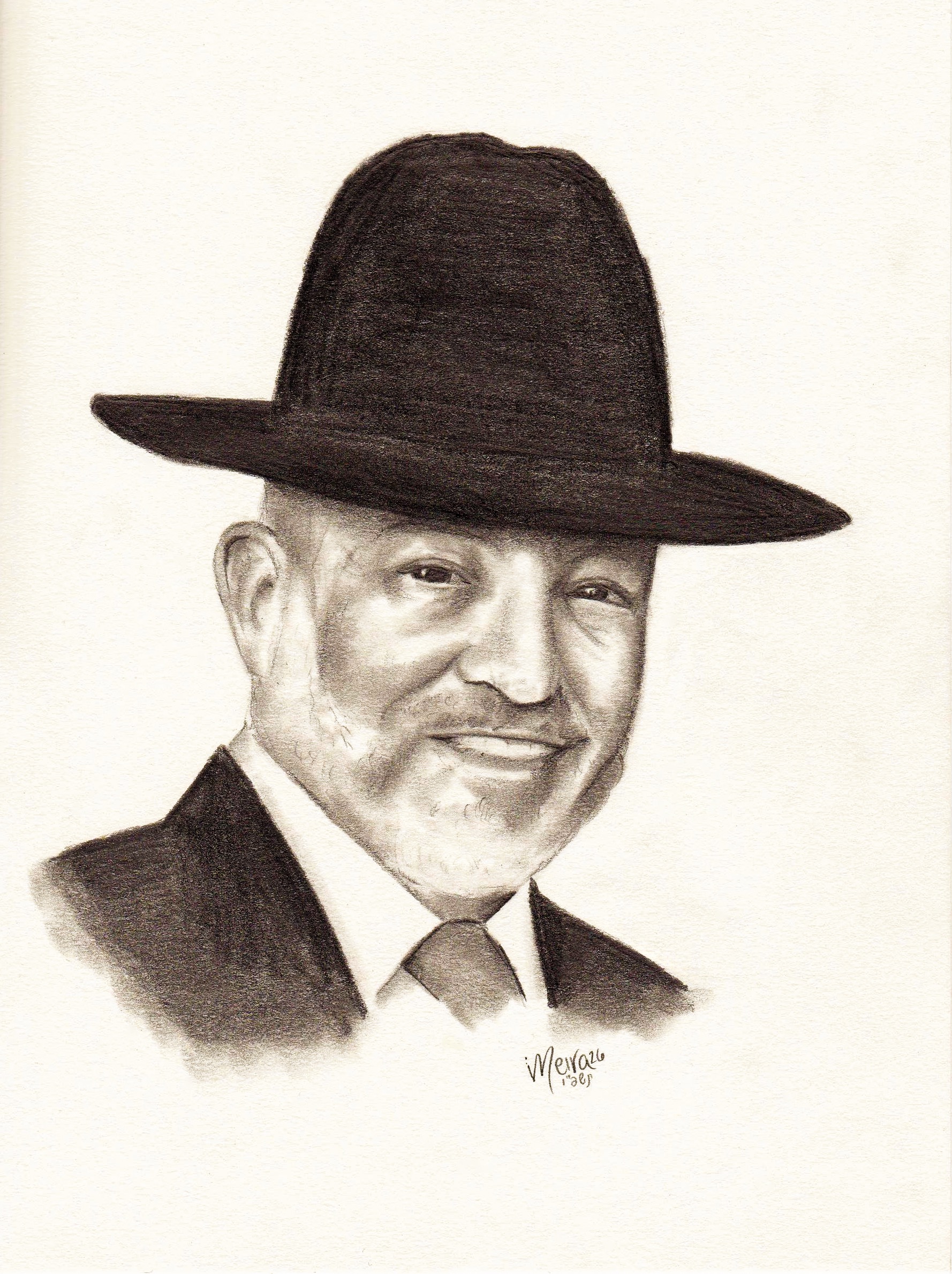
Reb Heshy Maryles, z”l: A Life Anchored in Torah
1953–2026
The Los Angeles Torah community and countless friends, students, former choir members and admirers around the country mourned the passing of Reb Heshy Maryles, z”l, a longtime Hancock Park resident whose life was distinguished by an uncommon combination of intense dedication to Torah, devotion to family, decades of chinuch and kiruv, quiet chesed, musical talent, and an infectious simchas hachayim.
Those were all important parts of Reb Heshy. But beneath them was something more fundamental. He was, first and last, a ben Torah. The Kollel of Los Angeles was the center of gravity of his adult life, and his learning shaped the seriousness, clarity and authenticity that he brought to everything else.
Reb Heshy, whose Hebrew name was Tzvi ben Yosef, was born on April 27, 1953, to Yosef and Pearl Maryles and was raised in Borough Park. As a child he was known as Hershel; in adulthood, virtually everyone knew him simply as Heshy.
He was a ben achar ben, a direct paternal descendant of Reb Shimon of Yaroslav, a connection that was meaningful to him and part of a family mesorah he took seriously and transmitted to the next generation.
His Torah education began at Yeshiva Torah Vodaas. For high school he attended Yeshiva Beis Shraga in Monsey, under the leadership of Rav Shmuel Feivelson. He subsequently learned under Rav Meir Hershkowitz, whose yeshiva was then located in Adelphia, New Jersey, and went on to spend several years learning in Beth Medrash Govoha in Lakewood.
The Kollel Was His Life
When Heshy moved to Los Angeles in 1982, a friend gave him a piece of advice that Heshy would later tell his children had changed his life: if he wanted to remain shtark, he should attach himself to the Kollel.
He did.
The family lived at a distance, and the Kollel was not simply their neighborhood shul. Yet, as his son Shimi later put it, “We were bnei haKollel. We felt it.” Heshy kept a hat and jacket there. Throughout his working years, he returned to the Kollel night after night for night seder, attending shiurim and chaburos while carrying the responsibilities of work and a growing family. After he retired, the Kollel occupied still more of his day, as he added a morning seder and second seder. The beis medrash became his second home.
More than 30 years before Heshy’s passing, Rabbi Yaakov Gruen first encountered him there. He did not yet know Heshy well. His first impression was simply the sight of Heshy sitting in the beis medrash with his longtime chavrusa, Chaim Lehman.
Rabbi Gruen later recalled a retzifus’dige limud, learning without distraction and with tremendous iyun. “I don’t think they looked right or left for hours together learning,” he said. Looking at Heshy, Rabbi Gruen assumed he was seeing a member of the Kollel. Only later did he appreciate that Heshy was already working for a living.
“This is not a baal habayis,” Rabbi Gruen recalled. “This is a ben Torah that’s also working.”
The impression was so characteristic that it resurfaced independently at the Lakewood levaya. A maspid who had known Heshy from his younger years said that even decades after Heshy had entered parnassah, whenever he saw him he still looked to him like a kollel yungerman. His entire mahus, he said, was that of a kollel yungerman.
This was not a matter of appearance. For more than 30 years, Heshy and Chaim Lehman maintained an extraordinary chavrusa. Together they learned Menachos, Berachos and numerous other masechtos; spent years on Shemiras Shabbos K’Hilchasa with its footnotes; learned much of Orach Chaim with Mishnah Berurah; and worked through practical areas of halachah including basar b’chalav, taaruvos, nidah, hagalas keilim, bishul akum, mezuzah and yichud.
His chavrusa summarized Heshy’s approach in a phrase that could almost describe the man himself: “Heshy did not believe in skipping.” A difficult Rashi was not passed over. A difficult Mishnah Berurah was not waved away. If something did not make sense, they stayed with it until it did.
His children knew the same Heshy. Shimi remembered his father almost always having a sefer in his hand at home, learning Mishnah Berurah and Piskei Teshuvos, and learning basar b’chalav b’iyun so thoroughly that he made three siyumim on it. As Shimi himself grew in learning, there was hardly a sugya he learned without calling his father. They would go through every kneitch: Heshy would ask, challenge, reject a sevara that did not hold up, and help straighten out another.
His insistence on clarity carried into halachah as well. Rabbanim knew that an answer given to Heshy might be followed by another question and another source. He wanted to know how the Shulchan Aruch worked, why the conclusion was correct, and where the boundaries lay. Torah was not something to repeat superficially. It had to be understood.
That fire was visible as well in the Kollel’s Thursday-night Shav Shmaatsa shiur, given for many years by Rabbi Moshe Yosef Moldaver. The shiur ran late - at times until around eleven o’clock - yet Heshy attended with striking consistency. Rabbi Moldaver remembered him not as a passive listener but as a lamdan who was completely arayngetan: asking, arguing back and fighting to understand. At the shloshim, Rabbi Moldaver said that Heshy was “emotionally attached to Torah.” Drawing on Rav Yerucham’s explanation of “asei Torascha keva,” he said that keva is not measured simply by the number of hours a person learns, but by where his chiyus lies. Even when Heshy was outside the beis medrash, Rabbi Moldaver said, his daas was there: “When am I getting back to the Kollel?” Torah was not merely something Heshy learned. It had become part of his very metzius.
Even during his illness, the Kollel remained where he wanted to be. Before treatments, he would speak about regaining enough strength to return. When active learning became difficult, he tried listening to shiurim. Eventually even that became too taxing.
On what the family feared might be his final Shavuos, Shimi had a chiddush he wanted to tell him. Heshy was too weak and initially said he could not manage it. At approximately two o’clock that morning, while his son was still awake nearby, Heshy whispered: “Tell me the chiddush.” Even when the strength to learn was disappearing, the desire to learn had not.
A Marriage and a Home That Changed Lives
On November 19, 1978, Heshy married Shaindy, beginning a partnership that would span nearly 48 years. Their home became a place where Torah was uncompromisingly real and, at the same time, remarkably welcoming.
In 1982, Heshy and Shaindy moved to Los Angeles, where Heshy taught for a few years, first at Emek and then at Yavneh. He eventually established his career as a computer programmer, but he never really left chinuch.
Together, Heshy and Shaindy became deeply involved with NCSY and kiruv. Their Shabbos table welcomed teenagers and young adults, including many who were discovering Torah observance for the first time. Heshy had an unusual ability to make people from very different backgrounds comfortable without changing himself or softening what he believed.
Decades later, those teenagers still remembered. One former student recalled beginning to become religious while in her teens and keeping Shabbos largely on her own. The Maryles home became one of the places where Judaism came alive for her. She remembered Shabbos lunches filled with laughter, food and warmth and wrote after Heshy’s passing that their open home had been an inspiration.
Another former student wrote that it was because of Heshy and Shaindy that she became frum, married a kollel yungerman and was raising a frum family.
A third former student sent Heshy a voice message shortly before his passing recalling a lesson he had taught her in eighth grade on Parshas Behaaloscha. Decades later, married with children of her own, she still remembered his teaching about the Menorah. She told him that his and Shaindy’s Torah and hashkafah had helped set the trajectory of the Jewish home she eventually built. A lesson delivered to an eighth grader had survived for a lifetime.
A Mechanech at Home
The most important recipients of Reb Heshy’s chinuch were his own children. Heshy and Shaindy raised five: Yehuda, married to Sarah; Vivi Keilson, married to Reb Ari Keilson; Duvie, married to Esther Malka; Shimi, married to Miriam; and Adeena Frommer, married to Avrohom Moshe. Their family grew to include many grandchildren.
His children remembered a father who taught far more by example than by speeches. His daughter Adeena described him as a nonconformist whose standards came from solid Torah hashkafos and a thirst for emes and yashrus, not from watching what other people were doing. “They were purely what was right,” she wrote. “That’s how he lived, whether you liked it or not.”
Yet those strong standards did not produce one-size-fits-all parenting. Adeena remembered that her father understood that every child was different and was mechanech each one in the way he or she needed in order to thrive. There were restrictions when necessary, but the children did not feel defined by their failures. He recognized their strengths, encouraged them to pursue what they were good at, and gave them confidence.
Reb Ari Keilson, his son-in-law, described the same quality from another angle. Heshy’s chinuch was thoughtful rather than reactionary. If a child had already made a mistake and felt terrible, Heshy understood that yelling would accomplish nothing educational. And despite being a man with strong opinions, Reb Ari said that in more than 23 years of marriage he could not remember receiving unsolicited advice from his father-in-law.
Heshy also made the family mesorah tangible. His brother remembered Heshy teaching him, as a bar mitzvah boy, the family’s particular way of wrapping tefillin. Decades later, when questions arose about the minhagim of their parents or family, Heshy remained the address.
His grandchildren’s accomplishments in Torah brought him particular nachas. Erev Shabbos conversations with Zeidy could include an expectation: have a good vort ready, and understand it. When one grandson completed several masechtos, Heshy called, nearly overcome with pride, trying to devise an appropriate gift. When a rav told him about hearing his son Shimi daven a long, deliberate Minchah while others were in a rush, Heshy began to cry with pride. “Shimi is tearing open the heavens for me,” he said.
The Father They Knew
When something mattered to one of his children, he invested himself in it. A car problem, a chinuch question, a tangled necklace, a business question or a broken object received his full attention. He researched, followed up and tried to solve it. He took even childhood hurts seriously, examining a small injury instead of brushing it aside.
The atmosphere of the Maryles home reflected the same combination of order, warmth and simchas hachayim. The Shabbos table was already set by Wednesday night. By Friday afternoon, with the preparations completed, Heshy could be found at the piano playing music. Guests were a constant presence, but the family did not put on a performance for them: they sat, sang and schmoozed as they always did, drawing visitors naturally into the life of the home. Afterward, when Shaindy was exhausted, Heshy was the one in the kitchen scrubbing dishes, putting away food and taking out the garbage, quietly doing whatever was needed.
He also delighted in Hashem’s world. Adeena remembered his wonder at a sunset, the ocean, animals at the zoo and killer whales. The same man who could spend hours bent over a sugya could look outward at creation with genuine hana’ah.
His children were never embarrassed by his quirks. They were proud of him. What gave them that pride was not perfection or polish, but the consistency between what he believed and how he lived.
Chesed With Seichel
Reb Heshy’s chesed was often quiet and unusually practical. His brother, who once prepared Heshy’s tax return when Heshy was still a young man struggling for parnassah, recalled discovering that he was already careful to give a chomesh, twenty percent, to tzedakah.
But Heshy valued not only chesed; he valued what he called pikchus in chesed, the intelligence to understand what another person actually needed. He noticed people others overlooked. He gave someone matzos because that was what the person needed, helped others before Yom Tov, gave kibbudim to people who needed recognition, and gave tzedakah without an audience.
His son Yehuda recalled that Heshy used to go on Motzaei Shabbos to City of Hope with music to cheer patients. On one occasion he brought a large keyboard instead of the far easier guitar. Asked why, he explained that he had noticed that the vibrations of a guitar could sometimes startle a patient. A keyboard allowed him to control the volume. The inconvenience to himself was secondary to the experience of the person in the hospital bed.
The same partnership existed behind Shaindy’s chesed. She runs One of a Kind, under the auspices of Tomchei Shabbos, providing new Yom Tov clothing to families in need in a way designed to preserve their dignity. Heshy was deeply proud of the undertaking. His children later learned how much of the behind-the-scenes work he quietly handled so that Shaindy could do what she did best.
Music as Chinuch
Music was another of Reb Heshy’s gifts. He was a talented musician, an accomplished baal tefillah and, for years, the director of the LA Boys Choir, which performed prominently at Yeshiva Toras Emes dinners, communal functions and the annual Chabad Telethon.
For many years, he davened for the amud on the Yamim Noraim at the Jewish Learning Center. After his passing, people wrote to the family about how deeply that davening had entered their own Rosh Hashanah experience - one woman saying that his heartfelt tefillah moved her to tears each year, another describing his voice as “sweet and vivacious” and remembering how naturally it belonged to the Yom Tov. His tefillos were another place where a gift he possessed became something he gave to others.
He was a perfectionist about music, but the choir was never only about performance. It was another form of chinuch. He understood children and knew when to demand more and when a boy simply needed to feel that he belonged. One story recalled at the levaya described how boys who were not particularly strong singers were nevertheless given a place in the choir because Heshy understood what inclusion could do for a child.
Former choir member Yoni Sokol later wrote that Heshy’s encouragement gave him confidence that affected his teaching and other areas of life. Sokol eventually became a chazzan for the Yamim Noraim and credited those years under Heshy’s direction with helping make that possible.
At home, too, music was woven into family life. The piano was a constant presence, as were Shabbos and Yom Tov zemiros. Even near the end, when so much physical strength had disappeared, the musical ear remained.
Serious Without Being Heavy
There was an apparent contradiction to Reb Heshy that speaker after speaker attempted to describe. His standards were serious. His yiras Shamayim was uncompromising. His learning was demanding. His views were considered and principled.
And yet he was remarkably easy to be around.
Rabbi Shmuel Fasman described a man who could make people from widely different backgrounds and levels of observance feel comfortable in his presence without changing who he was. Shimi remembered the Shabbos table drawing people who were secular, Modern Orthodox, baalei teshuvah, yeshivaleit, Chassidim, Litvaks and talmidei chachamim, all laughing together with his father.
His humor remained intact even when he was very ill. Weeks before his passing, Rabbi Fasman visited him in the hospital and joked that Heshy had apparently gone there only to give him additional sechar halichah for traveling farther to perform bikur cholim. Barely able to whisper, Heshy immediately answered: “You’re right. I can’t think of another reason why you came.”
That ease with people did not come from superficial charm. His family repeatedly returned to the same explanation: Heshy was real. His son-in-law said, “Everything about him was real.” Shimi described him as a man who “lived with seichel,” “lived with achrayus,” and “lived with emes.” People sensed that the humor, the Torah, the principles and the warmth all belonged to the same person.
Three Years
In 2023, Reb Heshy received a devastating cancer diagnosis. At an early hospital meeting, the family was told that he might have only three to six months. He lived another three years.
Those years brought painful treatments, severe physical discomfort, sleepless nights and repeated uncertainty. During that period, the family also endured the destruction of their home by fire. Yet those closest to him repeatedly testified that bitterness was almost entirely absent.
A friend asking how he was doing shortly after the diagnosis received a characteristically Heshy response: “A mensch tracht un der Eibershter lacht, and sometimes you just have to laugh with.” Man plans, Hashem laughs, and sometimes one has to laugh along.
Adeena wrote that one of her father’s longstanding fears had been becoming a burden on his children. Even when his illness became severe, that concern remained. When his children wanted to fly in, he often framed the trip not as coming for him, but as coming “to support Mommy.”
His admiration for Shaindy deepened through those years. Adeena remembered serving him breakfast during his illness. After Shaindy left the room, Heshy whispered to his daughter, “You should never have to be as good of a wife as Mommy is.” The sentence contained both gratitude and an awareness of what Shaindy had been carrying for him.
At the same time, he was unusually clear-eyed about death. Rabbi Elchonon Tauber said Heshy was among the rare terminally ill people he had encountered who was willing to discuss dying openly. He said Vidui repeatedly, made a cheshbon and addressed practical and halachic matters that needed attention. He fought fiercely to live without pretending that death was impossible.
On Simchas Torah, not long after receiving the diagnosis, Heshy stood beside his longtime chavrusa holding Sifrei Torah. His chavrusa looked at him and began to cry. Heshy, the one who was sick, became the comforter. “What are you crying for?” he said. “It’s nothing. It’s going to be good. It’s Yom Tov.”
A Legacy Measured in Generations
Reb Heshy Maryles passed away Friday night, Shabbos, July 24–25, 2026, at the age of 73. A levaya was held in Los Angeles on Sunday, July 26. A second levaya and the kevurah took place Monday, July 27, in Lakewood, New Jersey. He was buried at Congregation Sons of Israel Cemetery.
He is survived by his wife, Shaindy; their five children and spouses, Yehuda and Sarah Maryles, Vivi and Reb Ari Keilson, Duvie and Esther Malka Maryles, Shimi and Miriam Maryles, and Adeena and Avrohom Moshe Frommer; and many grandchildren. He is also survived by his brother, Duvie Maryles, and sisters Esther Koslowitz and Toby Cohen, all of Lakewood.
But the number of people who carry something of Reb Heshy is considerably larger.
There are former students who built Torah homes after first experiencing an authentic Shabbos at the Maryles table. There are men who remember standing as boys in the LA Boys Choir and discovering that they could sing, perform or lead a tefillah. There are people who received tzedakah without anyone else knowing. There are children and grandchildren who absorbed his insistence that Torah be understood rather than merely repeated.
And there is the image that several maspidim, independently, could not escape: Heshy in the beis medrash.
A working man sitting like a kollel yungerman. A chavrusa lasting more than three decades. Hours of iyun without looking right or left. A Mishnah Berurah that could not simply be skipped. A son calling with a sugya. A sick man longing to return to the Kollel. And, at two o’clock in the morning near the end of his life, a whisper: “Tell me the chiddush.”
He possessed music, humor, intelligence, confidence and an unusual ability to reach people. He was a devoted husband, father and grandfather, a mechanech and a baal chesed. But those who knew him understood where all of it was anchored.
He was a ben Torah.
And he never stopped being one.
Yehi zichro baruch.